Tile Wars TD
- 4.2
- Rating
- 10.00K
- Installs
- Free
- Price

 Analysis by App-foxy
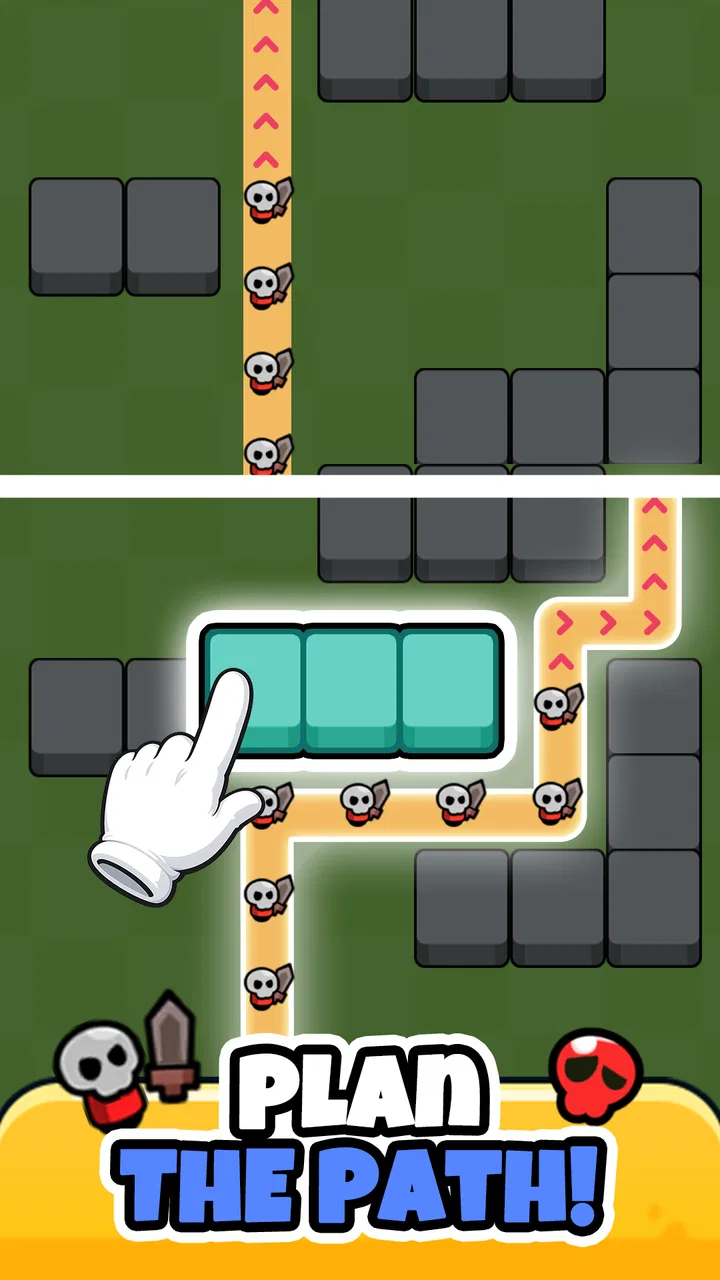
I spent my first sessions with Tile Wars TD looking for the idea behind its compact pitch: a strategy game where expanding the terrain and placing towers are connected decisions. That combination gives it a more active opening than a traditional tower defense game in which the map is already laid out and the main task is simply to upgrade a familiar line of defenses. Here, the appeal comes from deciding not only what to build, but also how to grow the space in which the battle will happen.
That makes this a promising choice for players who enjoy short strategic decisions rather than long, heavily scripted campaigns. It is a free game in the strategy category, developed by TREEPLLA, with an Everyone age rating. The current version is 1.0.4, and it runs on devices using Android 6.0 or later. The important question, though, is not whether the opening idea is interesting. It is whether the tile-based structure continues to reward attention after the first few pleasant sessions.
Why the first sessions are easy to enjoy
The strongest part of the experience is the way the board itself becomes part of the strategy. In an ordinary tower defense game, the route often tells you where the danger will travel, while your job is to identify the best defensive points. Tile Wars TD adds another layer: expanding terrain changes how you think about available space. Even a simple placement decision feels more meaningful when it affects the shape of the battlefield rather than only the strength of one tower.
You May Also Like

 AccuWeather: Weather Radar
AccuWeather Review: A Quick, Clear Forecast for Everyday Decisions
For everyday plans, the best forecast is the one you can understand quickly. AccuWeather makes rain timing, radar, and local conditions easy to act on, with a few trade-offs.

 Hill Climb Racing
Why Hill Climb Racing Still Turns Crashes Into One More Run
A tiny car, a bumpy hill and one more upgrade: Hill Climb Racing keeps resurfacing because its simple chaos makes every near-miss feel personal.

 AliExpress - Shopping App
AliExpress Makes Global Shopping Feel Personal, but Shoppers Bear the Risk
AliExpress turns a global marketplace into a pocket-sized discovery engine. Its reach is useful, its shopping loop compelling, and its trade-offs easy to miss.

 Lords Mobile: Kingdom Wars
Lords Mobile Is a Kingdom-Building Routine, Not a Quick Match
A case-by-case verdict on the building, battles, device demands, and social commitments that make Lords Mobile rewarding for some players and exhausting for others.

 PDF Scanner app - TapScanner
TapScanner Makes Paperwork Easier to Capture, Check, and Share
TapScanner makes scanning with a phone feel less like a rescue operation and more like a dependable step in getting work done. Its capture tools are useful, though not flawless.

 Block Blast!
 Shows How Much a Puzzle Game Can Leave Out
A quiet grid game shows why puzzle players increasingly value instant clarity, repeatable skill and low-pressure play—and where the genre still needs to catch up.
More From Our News Desk
View All News


I found that this creates a useful rhythm. I would first look at the immediate threat, then consider whether a defensive placement solved only the current problem or also left room for the next one. That second question is where the game feels most distinctive. A choice that looks efficient in the moment may leave an awkward area later, while a less obvious expansion can preserve better options. The game therefore rewards planning without requiring the dense interface or complicated terminology found in larger strategy titles.
It is also a good fit for players who like tower defense but have grown tired of repeating the same build order. The terrain-focused structure gives each decision a little more personality. I did not feel that I was merely following a checklist of “place this tower, upgrade that tower, wait for the next wave.” Instead, the board encouraged me to think in terms of space, timing, and future flexibility.
That said, the first-week appeal depends heavily on whether you enjoy experimenting. Players who want a clearly marked optimal route may find the opening less comfortable. The game’s central pleasure comes from testing arrangements and learning which choices remain useful later. If you prefer a strategy title that explains every consequence immediately, the tile system may initially feel more like a puzzle than a conventional defense game.
Small decisions matter more than flashy presentation
What kept my attention early on was not spectacle but the feeling that the map deserved to be read carefully. A tower placement is not isolated from the surrounding terrain. Expansion can create possibilities, but it can also encourage wasteful decisions if I treat every available tile as equally valuable. That is a subtle distinction, and it is one of the game’s better qualities.
My practical advice for new players is to resist spending every opportunity as soon as it appears. Before committing to an expansion, I would pause and ask three questions: does it improve the current defensive position, does it preserve a useful place for a later tower, and does it make the battlefield easier or harder to understand? This habit is more valuable than rushing toward the largest visible area. It turns the game from quick placement into deliberate board management.
Another useful approach is to judge a tower by the space it protects, not only by its immediate output. A seemingly modest position can become important if it covers a junction or supports several future choices. Conversely, a powerful-looking placement may be inefficient if it occupies the only flexible space. This is the kind of insight that does not appear in a short store description, but it is central to enjoying the game beyond the novelty of its premise.
The first sessions are also well suited to a casual routine. I can imagine opening it during a short break, making a few careful decisions, and stopping before the experience becomes tiring. It does not demand that every play session become a major commitment. For someone who wants a strategy game that can sit alongside a daily commute, a coffee break, or a quiet evening, that accessibility is a real strength.
What the free entry point means in practice
The game is free to download, but it includes in-app purchases ranging from $0.99 to $9.99 per item. That makes the initial decision easy: there is little reason not to try it if the tile-and-tower concept sounds appealing. The more important personal question is whether the available purchase options would improve convenience or weaken the satisfaction of solving the board through planning. I would approach the game with a clear limit in mind and treat purchases as optional rather than part of the basic reason to play.
Because the game is rated for Everyone, it is also approachable for a broad audience. That does not mean every player will find it equally suitable. The strategic layer still asks for patience, and younger or completely new strategy players may need time to understand why a seemingly good expansion can create trouble later. On the other hand, experienced tower defense players should recognize the basic logic quickly while still having a new spatial concern to consider.
The early audience response is encouraging but still modest in scale: the game has a 4.2 average from around 476 ratings, with 23 written reviews and over 10K installs. I read those figures as a sign of a promising early release rather than proof of a fully established long-term community. The version number also suggests a relatively young product, so I would expect the experience to be judged more by its core loop than by a large amount of accumulated content.
Does the strategy survive repeated play?
The month-to-month value depends on whether terrain expansion continues to create different problems instead of becoming a familiar routine. In my experience, the core loop has a useful foundation because it combines two forms of planning: choosing defensive positions and deciding how much battlefield to create. That gives the game more replay value than a tower defense title built around one fixed route and one obvious upgrade sequence.
Still, a flexible foundation is not automatically endless. Once I understand the general principles of protecting important spaces and avoiding cramped layouts, some of the surprise fades. The game needs its situations to keep challenging those principles. If every encounter can be solved by repeating the same safe expansion pattern, the tile system risks becoming decoration rather than a lasting strategic layer.
This is where I would separate the game from deeper alternatives in the genre. Large tower defense games often offer a broader range of towers, maps, difficulty modes, enemy behaviors, or long progression systems. Their strength is variety and the feeling of mastering a substantial ruleset. Tile Wars TD is more appealing when I want the board itself to be the main question. It is less convincing as a replacement for a content-heavy strategy game that I expect to study for weeks.
Compared with a simple puzzle game, however, it has a more satisfying sense of consequence. A puzzle usually asks for one solution within a defined arrangement, while this game asks me to build a workable defensive situation as conditions develop. That makes it more replayable than a one-answer logic challenge, though it also means the quality of each session depends on how well the available choices continue to produce meaningful trade-offs.
A realistic everyday use case
For a realistic daily scenario, imagine opening the game during a ten-minute break between tasks. I would not start by trying to maximize every possible reward or redesign the entire board. I would choose one immediate objective: stabilize a vulnerable section, protect a future placement area, or test whether a wider expansion is actually better than a compact one. That narrow goal makes the session feel complete even if I stop quickly.
On another day, I might use it as a wind-down game before bed. The advantage is that its strategy can occupy my attention without requiring the same emotional investment as a competitive multiplayer match. The disadvantage is that a difficult board can be more mentally demanding than expected, especially if I keep replaying a decision in my head. For a relaxing routine, I would play with a stopping point rather than treating every session as something that must be solved immediately.
That makes the game particularly suitable for people who enjoy incremental mastery. Each session can teach a practical lesson about space: leave room for adaptation, avoid confusing the largest area with the best area, and think about what a placement prevents as well as what it enables. Those lessons give the game a habit-forming quality that is more durable than simple novelty.
Where repetition may begin to wear thin
The first source of fatigue is predictable decision-making. If the same type of expansion repeatedly dominates, the player’s attention shifts from strategy to execution. At that point, placing towers can feel like maintenance rather than discovery. A game built around tactical choices needs those choices to remain genuinely close; otherwise, the most interesting part of the concept becomes a routine.
The second source is cognitive clutter. Tile-based planning is enjoyable when the board communicates clearly, but it can become tiring if I need to remember too many future possibilities while also responding to immediate pressure. I would rather make a few important decisions than constantly inspect a crowded field. Players who prefer clean, quick tower defense rounds should be aware that the extra spatial layer can slow the pace.
The third issue is the free-to-play context. Even when the core game is enjoyable without spending, optional purchases can affect how I think about progress and convenience. The sensible approach is to decide beforehand whether I am playing for experimentation or acceleration. If I begin measuring every session by what a purchase might have made easier, the strategic satisfaction becomes less central. That is not a problem unique to this title, but it matters because the game’s main appeal is making thoughtful choices for myself.
There is also a maintenance question for the developer. TREEPLLA has created a concept that can support continuing interest, but lasting value will depend on how well the game keeps its decisions fresh. New situations, meaningful balance changes, or additional ways to make terrain choices matter would help the core idea remain alive. I would not judge the game solely by how engaging the first week feels; I would watch whether later sessions still make me reconsider my habits.
Who should make room for it?
I would recommend it to someone who likes tower defense but wants the map to feel less predetermined. It is especially suitable for players who enjoy planning ahead, comparing two imperfect placements, and learning from a board that does not always reward the most obvious move. It also works for casual strategy fans who want a free starting point rather than a large, intimidating campaign.
I would be more cautious about recommending it to players who want a deep, content-rich alternative to established strategy games. If your priority is a huge variety of units, extensive progression, or a long list of modes, this may feel too focused. The same is true if you dislike games that ask you to experiment before revealing the best approach. Tile Wars TD is at its best when the process of figuring out the terrain is itself part of the entertainment.
It is also not my first choice for someone seeking a completely passive experience. Although the controls and premise are approachable, the board deserves attention. Playing while distracted can lead to decisions that are difficult to recover from, and that can make a short session feel frustrating rather than relaxing. The game rewards being present, even when the overall commitment is small.
My long-term verdict
After the initial novelty fades, Tile Wars TD earns space on my device when I want a compact strategy exercise built around terrain decisions. Its distinctive strength is the connection between expanding the battlefield and placing defenses. That relationship gives ordinary tower defense choices more consequence and offers a useful reason to return: I am not only trying to improve a tower arrangement, but also trying to understand better ways to shape the board.
Its lasting value is more conditional than guaranteed. I would keep it installed if I enjoyed discovering new layouts and if repeated sessions continued to challenge my assumptions. I would remove it if the best expansion pattern became obvious, if the board started feeling like routine upkeep, or if I found myself playing mainly to push through friction. The game’s free entry point makes that trial fair, while the optional purchases mean I would keep my spending boundaries clear.
My final recommendation is therefore positive but specific. Try it if the phrase “strategy through space” sounds more appealing to you than a conventional upgrade ladder. Give the opening sessions enough attention to learn why preserving future options matters, rather than judging it as a simple tower-placement game. If that habit of reading the terrain becomes enjoyable, the game can provide a satisfying recurring break. If you need a much larger and more varied tower defense experience, a more established alternative will probably hold your attention for longer.
For me, the deciding factor is maintenance: the game does not need to become a daily obligation to be worthwhile. It only needs to remain a small, thoughtful challenge that I can return to without feeling that I am repeating a solved routine. At its best, it does exactly that, and its compact idea gives it a clear identity among strategy games available on modern Android devices.
FAQs for Tile Wars TD
01What is Tile Wars TD and how does it differ from other tower defense games?
Tile Wars TD is a strategic tower defense game that combines traditional tower defense mechanics with unique tile-based gameplay. Unlike other TD games, Tile Wars TD allows players to manipulate the battlefield by placing tiles that can alter enemy paths, enhance tower capabilities, or provide strategic advantages. This dynamic element adds a fresh layer of strategy not commonly found in other tower defense titles.
02Can I play Tile Wars TD offline or is an internet connection required?
Tile Wars TD offers both offline and online gameplay options. You can enjoy the primary campaign and many of the single-player levels without an internet connection. However, to access certain features such as leaderboards, updates, and special events, an internet connection is necessary. This flexibility makes it suitable for both on-the-go and home gaming sessions.
03Are there in-app purchases in Tile Wars TD, and are they necessary for progression?
Tile Wars TD does include in-app purchases, which allow players to buy additional resources, special tiles, or aesthetic upgrades. However, these purchases are optional. The game is designed to be fully playable and enjoyable without spending money. Progression is achievable through strategic gameplay and skillful tile placement, ensuring a fair and balanced experience for all players.
04Is Tile Wars TD suitable for children?
Tile Wars TD is appropriate for players of all ages, offering a family-friendly gaming experience. The game features colorful graphics and intuitive controls, making it accessible to younger players. However, the strategic depth ensures that older players will also find it engaging. Parents can be assured that the content is free from violence and inappropriate themes.
05What are the system requirements for running Tile Wars TD smoothly on Android and iOS devices?
To run Tile Wars TD smoothly, Android devices should have at least 2 GB of RAM and be running Android version 8.0 or higher. iOS devices should be on iOS 12.0 or later with similar RAM specifications. While the game is optimized for a wide range of devices, meeting these requirements ensures the best performance and visual quality, enhancing the overall gaming experience.
Pros
- Engaging tower defense gameplay.
- Vibrant and colorful graphics.
- Smooth performance on most devices.
- Intuitive controls and interface.
- Regular updates with new content.
Cons
- Limited free-to-play progression.
- Some towers feel unbalanced.
- Occasional in-app ad interruptions.
- Requires constant internet connection.
- Battery drain on older devices.

Tile Wars TD
Gallery